Wednesday, January 3, 2018

[CRYOLIST] postdoc position at CPOM UCL

The Centre for Polar Observation and Modelling (CPOM) at University College London invites applications for a PostDoc position in seasonal ice forecasting with a focus on development of new remote sensing products and statistical models. 

The shrinking Arctic sea-ice cover has captured the attention of the world. The downward September trend has accelerated over the last decade, with the 10 lowest September sea-ice extents occurring in the last 10 years. An essentially ice-free Arctic during summer is expected by mid-century. Loss of the sea ice cover has profound consequences for ecosystems and human activities in the Arctic, so there is an urgent need to advance sea-ice predictions in all seasons at both the pan-Arctic and regional scales. A key finding that emerged from the first Sea Ice Prediction Network (SIPN) effort is that predictions of September sea-ice extent tend to have less skill in extreme years that strongly depart from the trend line. The objective of proposed research under Phase 2 of SIPN (SIPN2) is to improve forecast skill through adopting a multi-disciplinary approach that includes modeling, new products, data analysis, scientific networks, and stakeholder engagement.

The candidate will join the international SIPN team to advance seasonal forecasting using statistical methods and development of new products. Feedback from SIPN members has identified a number of variables that are key for improving sea ice predictions: sea ice thickness, surface roughness, melt pond fraction, floe size distribution and snow depth. CPOM UCL is leading the way with sea ice thickness and snow depth products, and wants to expand to other sea ice parameters needed to improve seasonal forecasts. These data sets can then be explored through statistical forecast approaches, such as links between melt pond fraction and September sea ice extent.

Duties:

1) Take an active role in developing new remote sensing sea ice data sets useful for seasonal ice forecasting.

2) Explore sources of predictability of regional and pan-Arctic sea ice extent, dates of ice retreat and ice advance, including atmospheric and oceanic contributions.

3) Disseminate results in peer-reviewed scientific journals and at international conferences.

Qualifications:

essential

     1) The position requires a PhD in physics, meteorology, oceanography or a related field. 

      2) Experience in remote sensing and/or climate modelling, and a good knowledge in climate physics and dynamics with a focus on the atmosphere and/or sea ice are required. 

     3) Profound knowledge in scientific programming and good English skills are expected. 

     4)  The candidate will be expected to disseminate results in peer-reviewed scientific journals and at international conferences.

Desirable

     1) Experience in image processing

      2) Experience in machine learning

      3) Experience with atmospheric reanalysis data

      4) Experience contributing to writing research proposal


For more information, please contact Prof. Julienne Stroeve (j.stroeve@ucl.ac.uk) 

Employment is limited to 24 months. The start date is 1 April 2018, or as soon as possible thereafter. The salary will be paid in accordance with the

the UCL Grade 7 Salary rate of £38,183 with a £2,980. The place of employment will be in London.

Please forward your applications with the standard documentation (cover letter with motivation, CV, publication record and two references) by January 31st 2018 viaemail (all documents merged into one PDF file) to: Leisa Clemente (l.clemente@ucl.ac.uk)

Job Title: PostDoc position at CPOM UCL (reference 1707962 - Research Associate in Remote Sensing)


[CRYOLIST] Environmental Seismology at the Seismology of the Americas 2018 Meeting

Dear Colleagues,

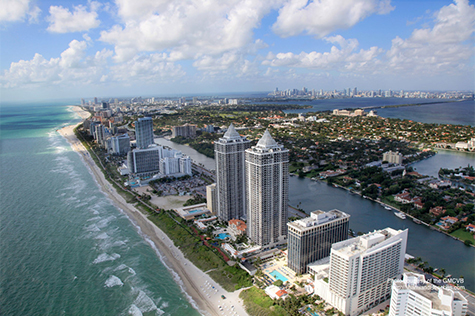
We invite you to submit Abstracts for this Environmental Seismology session at this year's joint Seismological Society of America/Latin American and Caribbean Seismological Commission Meeting in Miami (14-17 May).   The abstract deadline is 24 January, and the abstract link is at https://www.seismosoc.org/meetings/abstract-submissions.

Happy New Year,

Brad, Kate, and Rick


Environmental Seismology: Glaciers, Rivers, Landslides and Beyond

Environmental seismology is the study of seismic signals generated at and near the surface created by environmental forces in the atmosphere, hydrosphere or solid Earth. Contributions to this session are welcome on a wide variety of topics including (but not limited to) the seismic signals associated with landslides, rock falls, debris flows, lahars, snow avalanches, cliff or pinnacle resonance, bedload transport, fluid flow in open and confined channels, open water waves, tides, glacial stick-slip, iceberg calving, crevassing, extreme wind and weather and wind turbines or other anthropogenic sources. Contributions that seek to conduct monitoring, create physical or statistical models of source processes or systems, detect events, characterize a wave propagation environment, or interact with other branches of the Earth or social sciences are additionally encouraged.
Session Conveners
Bradley P. Lipovsky, Harvard University, Department of Earth and Planetary Sciences, <brad_lipovsky@fas.harvard.edu>
Kate Allstadt, U. S. Geological Survey, Geologic Hazards Science Center, <kallstadt@usgs.gov>
Rick Aster, Colorado State University, Geosciences Department, <Rick.Aster@colostate.edu>
Additional Information on the meeting:

Seismology of the Americas, 14-17 May 2018

Join us this May in Miami, Florida for our first joint international conference with the Latin American and Caribbean Seismological Commission (LACSC). 

This year, our conference will start with an official joint welcoming ceremony and reception on Monday, 14 May at 5 PM.  The conference will feature more than 50 sessions and many events, such as our Women in Seismology Reception, Pint & Poster hours and Mentoring Breakfast. 

In addition to the technical program of poster and oral presentations, there will be an evening of Lightning Talks: quick, five-minute presentations that cover a range of interesting topics. The SSA Award Ceremony and LACSC Business Meetings will be held early evening on Wednesday, 13 May. 

The Seismology of the Americas 2018 Program Committee is led by Co-Chairs Carol Prentice (United States Geological Survey) and Elizabeth Vanacore(University of Puerto Rico at Mayaguez).

We hope to see you there! 

Tuesday, January 2, 2018

[CRYOLIST] 28th IAHR Symposium on Ice, 4-9 June 2018

The 28th IAHR Symposium on Ice, is being held in Vladivostok, Russia on 4-9 June 2018. 

The abstract deadline has been extended until 25 January 2018.

The focus of the symposium will be on the research of ice properties, field tests, and the analysis of obtained results and their application.


For more information please contact Tatiana Uvarova searay@yandex.ru

[CRYOLIST] Polar Computing RCN: Call for Workshop Partnership & Funds [15 Jan]

The NSF funded Polar Computing Research Coordination Network (http://polar-computing.org) was tasked with analyzing opportunities and barrier in the uptake of high-performance & distributed computing in polar science. Specifically, the RCN was to:

  1. Address why the polar sciences are poorly represented in the use of HPDC cyberinfrastructure,

  2. Learn how the Polar Sciences were using and wished to use HPDC resources.

  3. Explore how to ensure that plans and design for new and existing NSF-funded cyberinfrastructure efforts are cognizant of the needs of the Polar Science community, and

  4. Understand how best to educate a new generation of polar scientists in the skills needed to realize the opportunities and potential of HPDC.


Having covered the core areas we proposed to NSF, we would like to engage and seek the broader community in determining the next areas of focus. We e would like to offer $15,000 to host a domestic event (must be hosted in the US for US participants)  to achieve these goals. We want to hear from YOU about how YOUR community could team up with the Polar Computing RCN to either expand or deepen our response to the charge detailed above.


Submit just a two-paragraph "proposal" to PI Shantenu.Jha@rutgers.edu describing your community, your proposed event, and how you would use the available funds. Deadline for submission is 15 January 2018. More information on the RCN and past activities at http://polar-computing.org.

--

[CRYOLIST] IGS Kyoto symposium on 'Cryosphere and Biosphere'

Dear Cryolist members


Some of you may have had difficulties registering for the Kyoto symposium, especially if you joined the IGS as part of the registration process. This has been due to problems we have been having with the remote access to our servers. We have not been in the office but have been relying on that access to process things.


Every transaction must be manually processed for 'data security' reasons and 'date protection' and we have been unable to do this since the start of the holidays.


This has now been resolved and we are working on this. We are hoping to have this done by the end of tomorrow.


For this reason we are extending the 'Early bird' deadline until 23:59 GMT Monday 8 January.


All the best

Magnús


--------------------------------------------

Magnús Már Magnússon

Secretary General

International Glaciological Society

High Cross

Madingley Road

Cambridge CB3 0ET

United Kingdom

Tel: +44 (0)1223 355 974

Fax: +44 (0)1223 358 334

E-Mail: igsoc@igsoc.org or magnus@igsoc.org

Web: http://www.igsoc.org/

---------------------------------------------


[CRYOLIST] EGU2018 session on Cosmic rays

Apologies for the short timeline and cross-posting…

-------------------------

Dear colleagues,

it is a pleasure to invite you to a dedicated session on

COSMIC RAYS ACROSS SCALES AND DISCIPLINES:
THE NEW FRONTIER IN ENVIRONMENTAL RESEARCH

at the European Geoscience Union's General Assembly (EGU) on April, 8--13, 2018 in Vienna. Besides AGU, the EGU conference is one of the largest international meetings in geosciences.

http://meetingorganizer.copernicus.org/EGU2018/session/27230

The interdisciplinary session would allow you to broaden the impact of your research, and also to discuss open questions to which answers are to be found beyond your specific discipline.

The session brings together scientists from cosmic-ray physics on Earth, hydrology, radiation protection, cosmogenic nuclides, neutron monitors and detectors, and modeling. We aim to stimulate discussions about how researchers from related disciplines can exchange their knowledge and benefit from each other.

The session is convened by researchers in various fields who share the interest in measurement and modeling of cosmic radiation for environmental purposes: Marek Zreda (U Arizona), Nathaniel Lifton (Purdue U), Bernd Heber (U Kiel), Werner Rühm (HMGU Munich), Rafael Rosolem (U Bristol), Markus Köhli (U Heidelberg), Konstantin Herbst (U Kiel), Steffen Zacharias (UFZ Leipzig).

We are glad to announce that Dr. Tatsuhiko Sato (Japan Atomic Energy Agency) and Prof. Dr. Tibor Dunai (Uni Köln) have accepted their invitation as solicited speakers. Tatsuhiko is an expert in modeling interactions of cosmic-ray neutrons with the atmosphere, in dosimetry, and in biological impacts of cosmic radiation. Tibor is an expert in the physical impacts of cosmic radiation, covering cosmogenic nuclides as tracers as well as isotope dating.

More details of the session please find listed below. Abstract submission deadline is JANUARY 10th, 13:00 CET. Please note that abstracts submitted afterwards require direct interaction with the convener, come with additional fees, and have a strict deadline of JANUARY 18th, 13:00 CET.

We are looking forward to your contribution.
Have a happy New Year!
Martin Schrön

GI2.7/AS4.16/CL5.23/EMRP4.8/HS11.13/PS4.7
Cosmic rays across scales and disciplines: the new frontier in environmental research (co-organized)
Convener: Martin Schrön
Co-Conveners: Marek Zreda , Nathaniel A. Lifton , Bernd Heber , W. Rühm , Rafael Rosolem , Markus Köhli , Konstantin Herbst , Steffen Zacharias
http://meetingorganizer.copernicus.org/EGU2018/session/27230

'Cosmic rays' collectively describe particles that bombard the Earth from space. They carry information about space and, once near the Earth, interact with the magnetosphere, atmosphere, hydrosphere and lithosphere. Secondary cosmic rays created within the atmosphere can provide information about our planet that is vital to science and society. Secondary neutron radiation plays an extraordinary role, as it not only carries information about solar activity, but also produces short and long living tracer isotopes, influences genetic information of living organisms, and is extraordinarily sensitive to hydrogen and therefore also to water. Given the vast spectrum of interactions of cosmic rays with matter in different parts of the Earth, cosmic-ray research ranges from studies of the solar system to the history of the Earth, and from health and security issues to hydrology and climate change.

Although research on cosmic-ray particles is connected to a variety of disciplines and applications, they all share similar questions and problems regarding the physics of detection, modeling, and environmental factors that influence the intensity. Questions that all disciplines have in common are, for example, "How does the cosmic-ray intensity and energy spectra change with time and location on Earth?", "How to correct the signal for magnetospheric or atmospheric fluctuations?", "What is the influence of local structures, water bodies, and surface conditions?", "Which computer model for cosmic-ray propagation is correct?", or "What can we learn from other types of cosmic-ray particles?".

The session brings together scientists from all fields of research that are related to monitoring and modeling of cosmogenic radiation. It will allow sharing of expertise amongst international researchers as well as showcase recent advancements in their field. The session aims to stimulate discussions about how individual disciplines can share their knowledge and benefit from each other.

We solicit contributions related but not limited to:
- Health and radiation protection: cosmic-ray dosimetry on Earth and its dependence on environmental and atmospheric factors
- Planetary space science: satellite and ground-based neutron and gamma-ray sensors to detect water and soil chemistry
- Neutron monitor research: detection of high-energy cosmic rays variations and its dependence on local and atmospheric factors
- Hydrology: low-energy neutron sensing to measure water in reservoirs at and near the land surface, such as soils, snow pack and vegetation
- Environmental isotopes, cosmogenic nuclides: as tracers of atmospheric circulation and mixing; as a tool in glaciology for dating of ice and measuring ablation rates; and as a tool for surface exposure dating and measuring rates of surficial geological processes
- Detector design: technological advancements for the detection of cosmic rays
- Cosmic-ray modeling: advances in modeling of the cosmic-ray propagation through the magnetosphere and atmosphere, and their response to the Earth's surface


<<<<<>>>>>

NATHANIEL LIFTON
Associate Professor

Purdue University
Departments of Earth, Atmospheric, and Planetary Sciences, and Physics and Astronomy
550 Stadium Mall Drive
West Lafayette, IN 47907-2051 USA

OFFICE: HAMP 3275
PHONE: + 1 (765) 494-0754
FAX: + 1 (765) 496-1210
E-MAIL: nlifton@purdue.edu
URL: http://www.eaps.purdue.edu/people/faculty-pages/lifton.html

<<<<<>>>>>


_______________________________________________
You're subscribed to the CRYOLIST mailing list
To send a message to the list, email cryolist@cryolist.org
For posting guidelines, see http://cryolist.org/posting.html

[CRYOLIST] Post-doctoral scientist position at the UCL, Belgium: Modelling glacier changes over the past millennium

The Georges Lemaître Centre for Earth and Climate Research (www.uclouvain.be/teclim) / Earth and Life Institute of the Université catholique de Louvain, Louvain-la-Neuve, Belgium invites applications for the following position:


Foreign Post-doctoral Fellow

Starting date between February 1 and May 1, 2018

Full time position for 24 months

Net monthly salary 2300-2500 € (depending on experience - this includes social insurances).


The candidates must not have spent more than 2 years in Belgium over the last 3 years and should not have obtained their PhD more than 6 years before the starting date of the grant.


The postdoctoral researcher will work on the project 'Evaluating simulated centennial climate variability over the past millennium using global glacier modelling" funded by the F.R.S. - FNRS .


The successful candidate will be in charge of performing simulations with the Open Global Glacier Model (OGGM) driven by climate model results at global scale and to compare those results to reconstructions of glacier length fluctuations. The goals are first to evaluate the ability of the model to reproduce the multi-decadal to centennial variability recorded in glacier observations and to determine the origin of those variations. In a second step, the contribution of glacier mass variations and thermal expansion in sea level changes over the pass millennium will be assessed.


Required qualifications:

- To have a PhD in climatology, Earth science or related field (physics, informatics) with previous experience in Earth science;
- To have published in peer-reviewed international journals;
- To have experience in
computational programming and in managing large data sets - an experience with Python is a strong asset;
- To have demonstrated verbal and written communication skills in English;

- To have interest in working in a multidisciplinary team environment.


Applicants should send (i) a statement of research experience, qualification and interest, (ii) a complete CV including a list of publications, and (iii) two letters of recommendation via e-mail to Hugues Goosse (hugues.goosse@uclouvain.be).

Review of the applications will start January 25 and the call is open until the position is filled.

--   ________________  Hugues Goosse  Earth and Life Institute-Université de Louvain  Homepage http://www.climate.be/u/goosse  Climate System Dynamics book  http://www.climate.be/climatebook  Online textbook http://www.climate.be/textbook  Climate of the Past http://www.climate-of-the-past.net/

[CRYOLIST] EGU 2018 CR1.4 Glaciers and Ice Caps

Dear colleagues,

One more reminder for EGU in Vienna, 8 – 13 April 2018.

Session CR1.4  Glaciers and ice caps under climate change

This is a general session on glaciers and ice caps in all regions of the
world where the relationship to climate forms a particular focus. We
welcome presentations on all aspects of current, past and future glacier
changes based on field observations, remote sensing and modeling.

See session details:

http://meetingorganizer.copernicus.org/EGU2018/session/26451

The abstract submission deadline is  10 Jan 2018, 13:00 CET.

We look forward to seeing you in Vienna.

Best regards from the conveners,

Jon Ove Hagen, Nicholas Barrand,  Matthias Huss and Georg Kaser

--   Jon Ove Hagen, professor  Department of Geosciences, University of Oslo,  POBox 1047 Blindern, 0316 Oslo, Norway  Tel: +4722854038, Mobile: +4790647908  e-mail: joh@geo.uio.no